Lately, I have been getting the same question after talks.
Sometimes it comes after a session on AI agents, like my talk at the 14th Bicol Youth Congress in Information Technology. Sometimes it comes after Machine Learning workshops with students from DLSU ACCESS or La Salle Computer Society. Sometimes it comes from students who still remember me from my part-time professor days at Mapua University.
The question usually sounds like this:
What device should I buy if I want to learn programming?
Then it becomes more specific.
- What about Machine Learning?
- What about AI?
- What about Data Science?
I could probably start a religious war in tech with my answer. Some people will say you need a powerful Windows laptop. Some will say you need a desktop with a proper GPU. Some will say Linux or nothing. Some will defend whatever machine they personally suffered through and somehow survived with.
But the honest answer, at least for me, is a little less dramatic.
I have been using a MacBook Air M1.
It still has the stickers I've collected from various tech events I've attended.
Not the maxed-out one. Not some cinematic tech YouTuber configuration.
- Just the M1 chip
- 8GB RAM, and
- 256GB SSD.
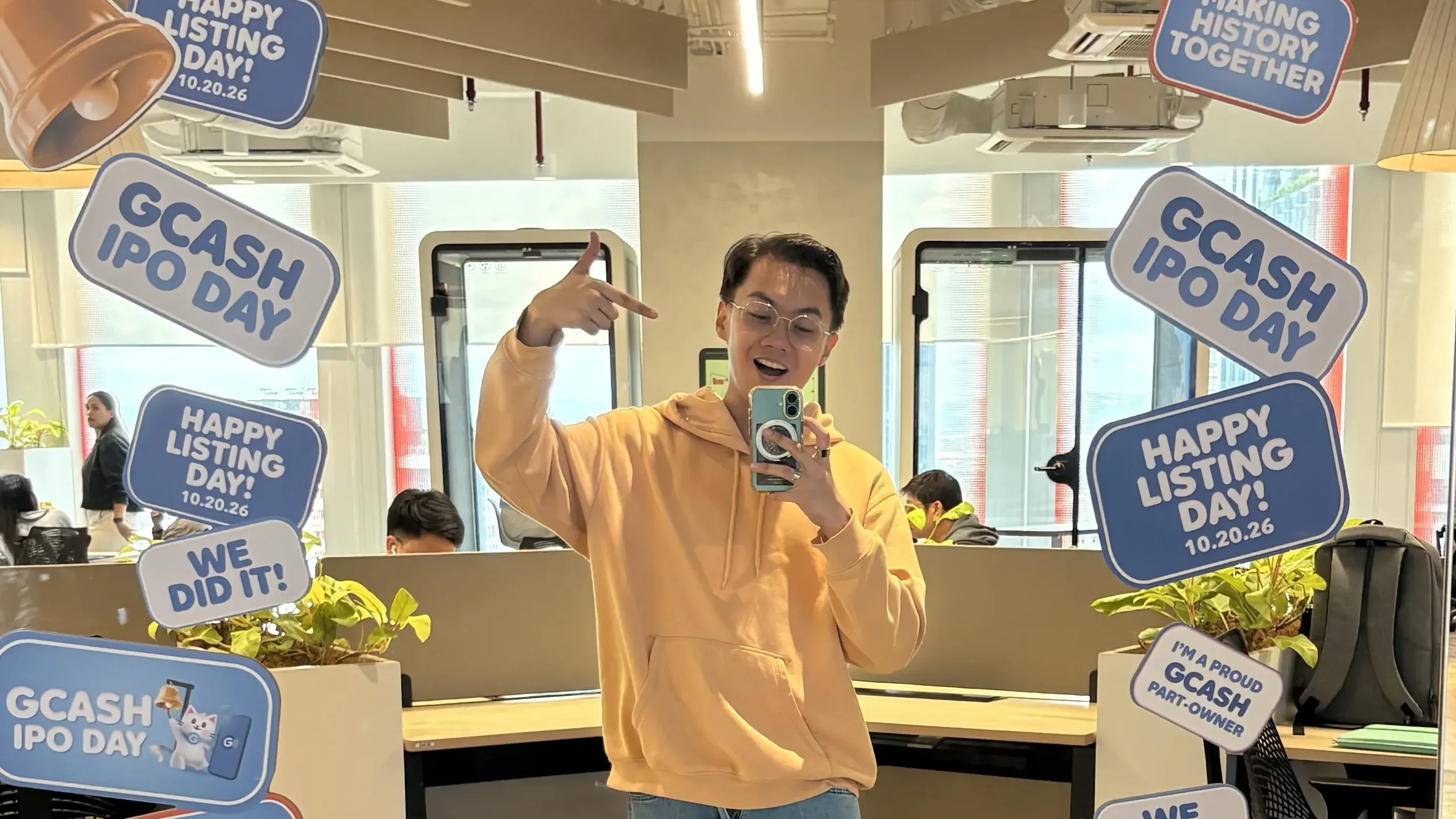
I started using it in 2023, during my third year at Mapua University, which was also my graduating year. It is now 2026. I am already a Lead Software Engineer at GCash, and somehow, this same thin little machine is still here with me.
At this point, I think it deserves a proper appreciation post.
The Thesis Machine
This was the device I used while working on my undergraduate thesis, "Detection of Water Hyacinth (Eichhornia crassipes) on the Water Surface of Pasig River, Philippines, through YOLOv7."
That thesis became the Best Undergraduate Thesis in our BS Computer Science batch at Mapua University. It was also presented at the 6th International Conference on Computational and Intelligent Systems in Tokyo, Japan, where it received the Excellent Oral Presentation Award.
And yes, believe it or not, this MacBook Air M1 was part of that journey.
I fine-tuned the object detection model for that study using this machine. Of course, I had to be practical. I was not pretending that an 8GB laptop was some secret deep learning supercomputer. There were constraints everywhere. Memory mattered. Storage mattered. Runtime mattered. I had to think carefully about what should run locally, what should be moved elsewhere, and how much friction I could tolerate before changing my workflow.
But that was part of the training too.
The limitation forced me to understand my tools instead of just throwing hardware at every problem.
The Work Machine
This was also the same laptop I used during my internship at Sagesoft Solutions Inc., where I developed a backend API deployed on AWS EC2. I still remember that season as one of those periods where everything felt connected. School, thesis, internships, cloud, backend development, and the pressure of trying to become employable all seemed to be happening at the same time.
And through all of that, the laptop just kept showing up.
It was:
- The device I used while preparing for GCash
- The device that helped get me into GCash
- The device that carried me through the GCash FinTech Engineer Cadetship Program
It carried me through the GCash FinTech Engineer Cadetship Program, where I had to learn software development, DevOps, Agile practices, AWS, and production engineering habits at a pace that did not always care whether I felt ready.
During that program, I was also preparing for certifications:
- AWS Solutions Architect Associate
- AWS Developer Associate
- AWS Machine Learning Engineer Associate
- AWS AI Practitioner
- AWS Cloud Practitioner
- GitHub Foundations
- Later, Microsoft Azure Developer Associate
I studied for those on this machine.
Not on some perfect setup with unlimited screens, unlimited storage, and unlimited confidence. Most of the time, it was just me, this laptop, too many browser tabs, notes, docs, practice questions, and the recurring thought that maybe I was in over my head.
But the work got done.
The Research Machine
When I became a Research Scientist at Mapua University, the same machine stayed in the picture. I worked on optimizing and training a YOLOv12 model for forest fire detection from satellite and aerial imagery. The research involved hyperparameter tuning, data augmentation, and testing different YOLOv12 variants to balance accuracy and speed. Here's a glimpse of the project I've worked on.
Again, the MacBook Air M1 was not doing everything alone like some mythical workstation.
But it was my command center.
It was where I prepared code, reviewed experiments, cleaned workflows, adjusted configurations, studied results, and made decisions. When I needed more compute, I used the cloud. When I needed to think, write, debug, and organize the work, this machine was enough.
The Grad School Machine
That pattern became even clearer now that I am taking my Master of Science in Artificial Intelligence at The University of Texas at Austin.
This was also the device I used while preparing for my IELTS exam. It is the same device I use for my master's work. When I need to train deep learning models, I borrow GPUs from Google through Google Colaboratory. I use the VSCode extension for Google Colab so I can train directly from my IDE without keeping the notebook open in the browser all the time. Was also able to carry me throughout my courses with a Grade of A.
Through that setup, I have been able to work with A100 and T4 GPUs.
That is one of the biggest lessons I wish more students understood earlier.
Your laptop does not need to be the entire universe.
It can be a doorway.
It can be the place where you:
- Write code
- Read papers
- Prepare experiments
SSHinto servers- Connect to cloud notebooks
- Manage repositories
- Think through what you are building
For a lot of students asking me what device they need to start, I think that distinction matters. Buying a stronger machine can help, of course. I am not going to pretend specs are irrelevant. If you have the budget and the work justifies it, get the better tool.
But do not confuse better tools with permission to begin.
I have built backend APIs, trained object detection models, prepared for certifications, joined GCash, worked through cadetship, supported research, studied for graduate school, and continued learning AI with a base model MacBook Air M1.
Also, It Played Games
Also, because life is not just certifications and model training, I played games on it too.
Yes, Steam exists on Mac.
On this laptop, I:
- Finished my non-Space Age DLC run of Factorio
- Finished normal and permadeath runs in No Man's Sky
- Played Hades 1
- Played Stardew Valley
Was it the ultimate gaming setup? No.
Did it bring me joy after long stretches of code, papers, diagrams, and deadlines? Absolutely.
The Limits Are Real
Recently, though, I have started feeling the limitations more clearly.
The 256GB SSD is the part that hurts the most. I have been squeezing every gigabyte out of it like it owes me money.
Cloud storage, external drives, careful cleanup, selective installs, the whole routine.
Some things are just heavy now:
- Docker takes space.
- VMs take space.
- VMware Fusion takes space.
My only VM on this machine is an Ubuntu VM with 20GB of storage, and even that feels like I am negotiating with the laptop every time I set something up.
There are moments when I look at modern devices in 2026 and feel the gap.
- More RAM
- More storage
- Better screens
- Faster chips
- Better thermals
- Cleaner workflows for local development
- Less mental accounting every time I install something
And yet, I still feel attached to this machine.
Maybe part of it is sentimentality. This laptop has been with me through too many versions of myself.
Student. Intern. Thesis author. Fresh graduate. Cadet engineer. Software engineer. Lead Software Engineer. Research Scientist. Master's student.
But I think there is something else too.
This laptop made me resourceful.
It made me ask better questions:
- Do I really need to run this locally?
- Can I use Colab for training and keep my local machine focused on development?
- Can I move old files to external storage?
- Can I containerize only what I need right now?
- Can I clean this setup before blaming the hardware?
That kind of thinking is not glamorous, but it is useful. It turns constraints into a kind of discipline. Not the fake inspirational kind where people romanticize struggle for no reason, but the practical kind where you learn to make decisions because you cannot afford to be careless.
The Suit And The Work
That is why I keep thinking about Tony Stark's lesson to Peter Parker in Spider-Man: Homecoming.
"If you're nothing without the suit, then you shouldn't have it."
The point was not really about the suit. It was about heart. Character. Inner drive. What remains when the armor, gadgets, and titles are removed.
I know comparing that to a laptop sounds a little funny, but that is where my mind goes.
Because in my case, the MacBook Air M1 became my version of that lesson.
No matter how old it feels now, no matter how limited 8GB RAM and 256GB storage look beside the machines available in 2026, it still taught me something I do not want to forget.
A high-end device can make work easier.
But it is your resourcefulness that decides how much value you can create from whatever device is in front of you.
So when students ask me what device they need to start programming, learning Machine Learning, studying AI, or exploring Data Science, I try to answer carefully.
Get the best device you can reasonably afford.
But do not wait for the perfect machine before becoming serious about the work.
Sometimes the machine you already have is enough to begin. Sometimes it is enough to carry you much farther than you expected.
And sometimes, years later, you realize that the little laptop you kept trying to outgrow was quietly teaching you how to become an engineer.